
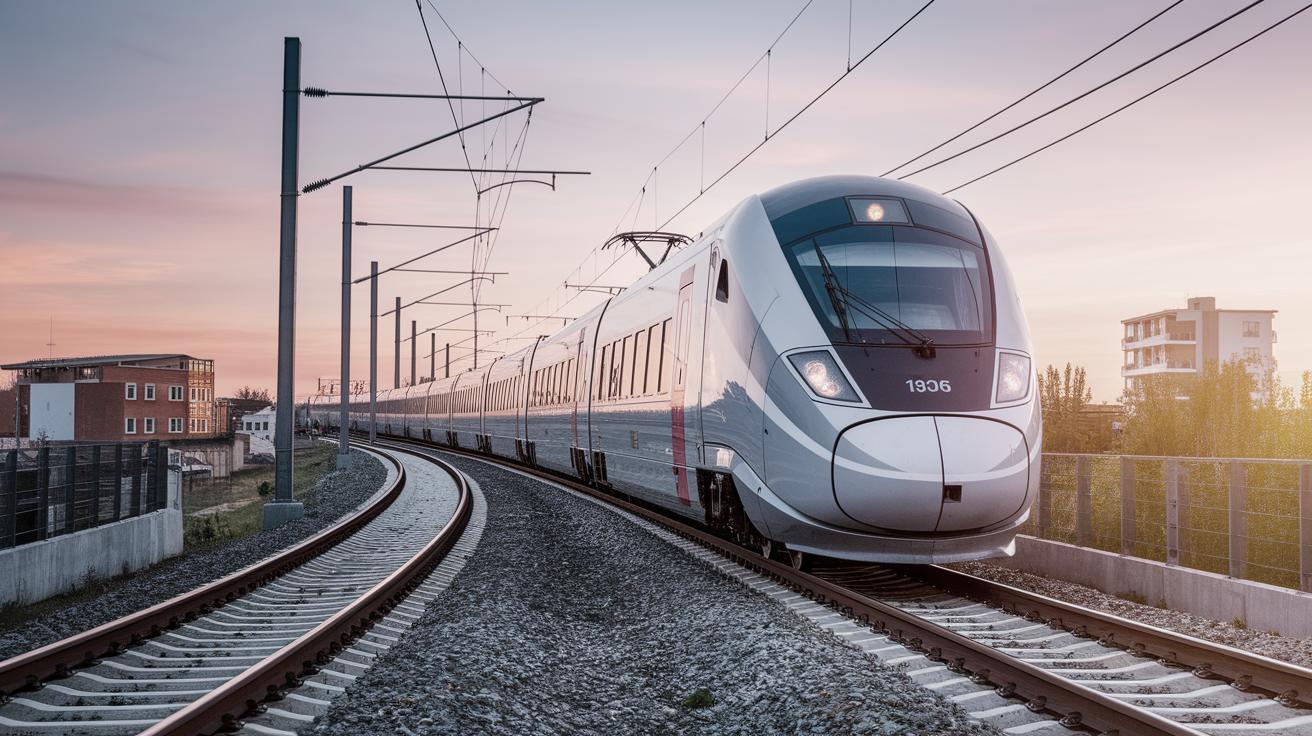
Understanding Tilting Train Technology on Curved Tracks
Tilting train technology is a hallmark of modern rail systems, particularly in Europe, where high-speed travel demands both efficiency and comfort. This article delves into how tilting technology allows trains to navigate curved tracks with ease, enhancing performance and passenger experience. From its adaptation to existing networks to challenges in interoperability, we explore its significance in the rail industry. We will also examine the “New Pendolino” – the latest advancement in ALSTOM’s tilting train series. Join us as we unravel the intricacies of this fascinating technology and its impact on the future of rail travel.
High-speed – a market that remains principally European
High-speed rail has predominantly thrived within Europe, where a dense network of rail lines and cross-border connections support its wide adoption. European countries have invested considerably in high-speed rail technology, knowing its capacity to integrate with existing infrastructure. The geographical layout and economic landscape of Europe make rail travel an appealing mode of transport – both in terms of efficiency and ecological impact.
The European market for high-speed trains continues to be stimulated by the demand for faster, more reliable, and environmentally friendly travel solutions. Consequently, governments and rail companies are investing in cutting-edge technologies like tilting trains, which offer a vital solution by allowing trains to maintain higher speeds through curves, minimizing travel times and maximizing rail usage.
Tilting – a technique adapted to existing infrastructure and winding networks
Tilting train technology emerges as an innovative solution to a longstanding rail challenge: navigating curved tracks without sacrificing speed or causing passenger discomfort. Most traditional rail lines were built over grounds that required winded routes to avoid geographical obstacles or to fit within existing urban developments, thus featuring numerous curves.
By utilizing computerized control systems, tilting trains adjust the angle of the carriages as they approach curves, thereby counterbalancing the centrifugal force exerted on passengers. This allows for faster travel without the jarring sway that passengers would otherwise feel – a crucial adaptability enabling modern high-speed rail to flourish across landscapes originally designed for slower trains.
Performance, interoperability and comfort: the challenges for tilting trains
Tilting trains face several challenges, particularly in balancing performance with passenger comfort and ensuring interoperability across various rail systems. Early tilting mechanisms, primarily mechanical or passive, have evolved into sophisticated active systems that can precisely control tilt angles based on data from sensors and preloaded track maps. This sophistication enhances performance and passenger comfort, allowing for sustained high speeds around curves.
Interoperability remains a hurdle due to the diverse railway systems in place across different regions. Compatibility with these systems, including power supply and track gauge variations, is essential for the successful integration of tilting technologies. Nonetheless, advances in train design and signaling technology are bridging these gaps, paving the way for broader adoption of tilting trains worldwide.
‘New Pendolino’ – the fourth generation of ALSTOM tilting trains
The “New Pendolino” represents the fourth generation of ALSTOM’s pioneering tilting trains – exemplars of modern rail innovation. These trains incorporate the latest advances in aerodynamics and materials science to extend energy efficiency and reduce maintenance costs. With enhanced digital control systems, they offer unprecedented levels of reliability and comfort.
Designed with passenger experience at the forefront, the New Pendolino also addresses environmental concerns. It boasts reduced noise levels and lower energy consumption, aligning with contemporary demands for sustainable transport solutions. This evolution of the Pendolino line showcases ALSTOM’s commitment to leading the charge in tilting train technology.
References
-
ALSTOM: New Pendolino Overview
-
Railway Technology – Benefits of Tilting Trains
-
Eurail’s Guide to European High-Speed Trains
Share this:
Facebook
|
Twitter
|
LinkedIn
|
Email
Related
Explore articles on other advanced rail technologies and their impact on modern transportation infrastructure.
Issue
This article appeared in the November 2023 issue of RailTech Magazine.
Related topics
- Railway Systems Engineering
- High-Speed Rail Technology
- Transportation Infrastructure
Related organisations
- ALSTOM
- European Rail Infrastructure Managers
- International Union of Railways (UIC)
Final thoughts
| Section | Summary |
|---|---|
| High-speed – a market that remains principally European | Explores the predominance of high-speed rail in Europe and the market’s future prospects. |
| Tilting – a technique adapted to existing infrastructure and winding networks | Discusses how tilting technology adapts to traditional rail challenges of curved tracks. |
| Performance, interoperability and comfort: the challenges for tilting trains | Examines the balance of performance and comfort, and the need for system interoperability. |
| ‘New Pendolino’ – the fourth generation of ALSTOM tilting trains | Profiles the advancements and sustainability efforts of the latest ALSTOM tilting trains. |

