
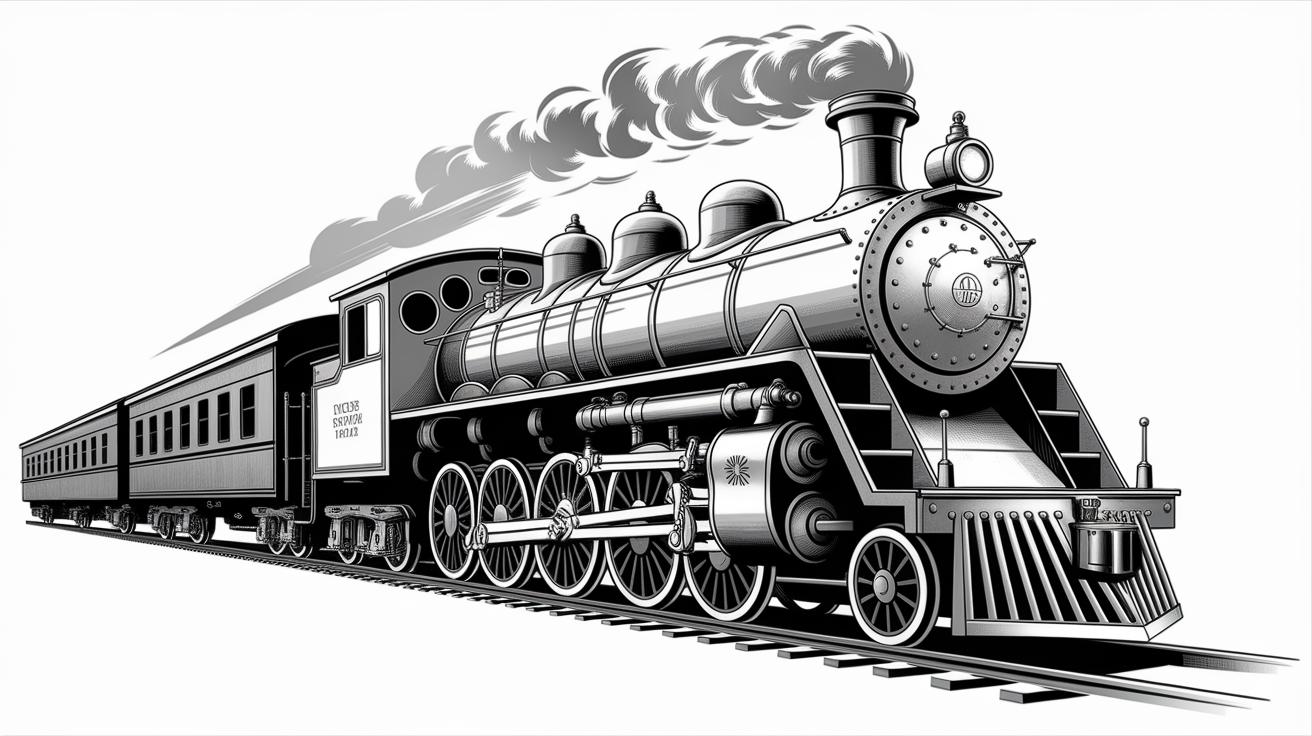
The Art and Craft of Union Pacific Train Drawing
Union Pacific trains hold a special place not only in the history of transportation but also in the hearts of artists and train enthusiasts who attempt to capture their grandeur through drawing. This blog post delves into the art of depicting these iconic trains. We’ll explore the history of Union Pacific, how to approach drawing such intricate machines, the tools and techniques used by artists, and advice on fine-tuning your skills. Whether you’re an aspiring artist or a train aficionado, understanding the nuances of train drawing can be both fulfilling and enlightening.
The Historical Significance of Union Pacific Trains
The story of the Union Pacific train stretches back to the 1860s, marking a transformative era in American history. Established under the Pacific Railway Act of 1862, the Union Pacific Railroad played an instrumental role in connecting the United States’ coasts, thereby cementing the nation’s economic and cultural unity. The railway’s expansion across the American West signified progress and was a symbol of the technological ingenuity of the time.
Union Pacific is renowned for its innovations, including some of the largest and most powerful locomotives ever constructed, such as the Big Boy and the Challenger series. These engines not only showcase American industrial prowess but also provide a rich subject for artists who wish to encapsulate the essence of a bygone era.
Capturing the silhouette and intricate details of such historic trains requires more than just artistic skill; it demands a deep appreciation of their cultural and historical contexts. By understanding the legacy these trains represent, artists can infuse their work with the spirit of American enterprise and adventure.
Approaching the Drawing of Intricate Machines
When setting out to draw a Union Pacific train, the initial step is to understand its structure and components. An artist must familiarize themselves with the anatomy of the train, which includes the locomotive, cars, wheels, and intricate details like rivets and couplings. Studying photographs, blueprints, and even model trains can provide invaluable insights that inform an artist’s approach.
The complexity of these machines means that an artist must be meticulous. Starting with basic shapes to outline the train’s form helps manage the complexity. Gradually, adding layers of detail can turn a simple sketch into a highly realistic rendering. This process teaches patience and precision, crucial attributes for any artist dealing with mechanical subjects.
It’s often beneficial to approach each section of the train as a separate subject. By breaking down the train into its constituent parts, artists can focus on rendering each part with accuracy before piecing it together into a cohesive whole.
Tools and Techniques for Train Drawing
The choice of tools can significantly affect the outcome of your drawings. For Union Pacific train drawings, pencils are a popular choice for their ability to produce fine lines and details. Graphite pencils, ranging from 2H for lighter lines to 6B for darker shading, can help capture the tonal ranges of the train.
In addition to pencils, ink pens and technical drawing pens can be used to outline and highlight specific features of the train, adding contrast and depth. For artists interested in color, watercolor and colored pencils can bring a vibrant life to the drawings, particularly in depicting the iconic yellow and red Union Pacific livery.
When it comes to technique, learning to layer your work is crucial. Begin with light sketches, then proceed to outline and define the shapes using harder pencils. Gradually add shading to create volume and texture. Techniques such as cross-hatching and stippling can enhance the sense of depth and realism in the drawing.
Advice for Aspiring Artists
For those looking to refine their train-drawing skills, the journey often begins with practice and a commitment to improvement. Observational skills are paramount. By immersing oneself in various reference materials, an artist can develop a keen eye for the subtleties that distinguish Union Pacific trains from others.
It’s also valuable to connect with communities of train enthusiasts and artists. Engaging with forums, attending exhibitions, and participating in drawing groups can provide feedback and inspiration. Learning from others, sharing techniques, and receiving constructive critiques can propel artistic growth.
Lastly, patience and perseverance are key. Train drawing is a discipline that requires dedication. Embracing mistakes as learning opportunities rather than setbacks can foster resilience and continuous improvement in one’s craft.
Final Thoughts
| Section | Content Summary |
|---|---|
| Introduction | A summary of the importance and appeal of drawing Union Pacific trains, setting the stage for the detailed exploration that follows. |
| The Historical Significance of Union Pacific Trains | An overview of the historical context, significance, and innovations of Union Pacific trains, highlighting their appeal to artists. |
| Approaching the Drawing of Intricate Machines | Guidance on understanding the complex structure of trains and developing a methodical approach to capturing them in art. |
| Tools and Techniques for Train Drawing | Insights into the preferred tools and techniques for drawing trains, including the use of various pencils and inking methods. |
| Advice for Aspiring Artists | Suggestions for improving train-drawing skills, emphasizing practice, observation, community engagement, and perseverance. |

