
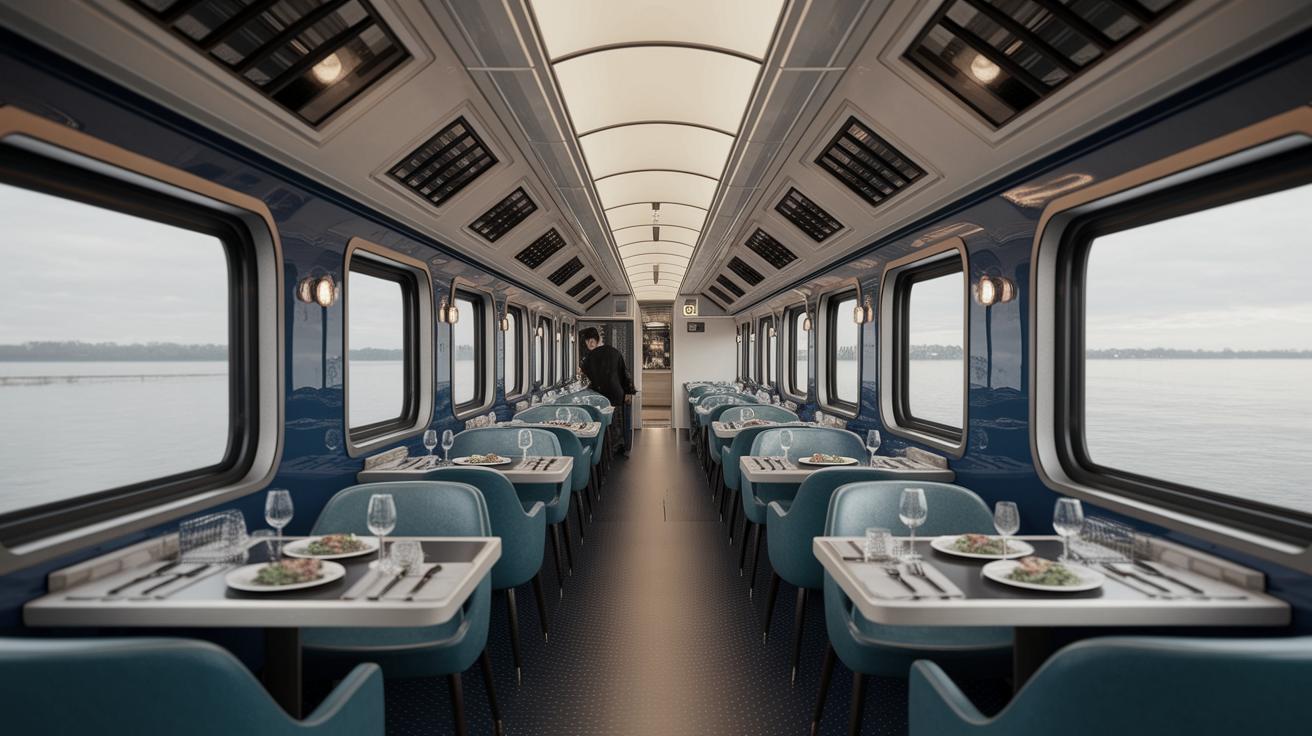
The Evolution of Train Car Dining: A Journey Through Time
The allure of dining on a moving train has fascinated travelers since the dawn of rail travel. This blog post explores the fascinating history and development of dining cars, highlighting key innovations and milestones that shaped train dining. From the introduction of the first food-focused cars to the luxurious full-service dining experiences of the past, we delve into how onboard meals evolved and the factors leading to the decline of traditional train dining. Finally, we consider whether railway dining is still a viable option today.
The Need For Train Car Dining
The concept of dining cars emerged from the practical need to provide sustenance to passengers undertaking long journeys by rail. As railroads expanded and journeys grew longer, it became imperative to offer meals on trains, leading to the development of dining services that could cater to travelers’ needs.
Dining cars were designed to enhance the travel experience, providing comfort and convenience. They became a distinctive feature of railroad travel, combining hospitality with the thrill of adventure. Passengers could enjoy freshly prepared meals, often accompanied by scenic views, which made for a memorable dining experience during their journey.
Pullman’s Impact On Train Car Dining
Pullman, synonymous with luxury and comfort, revolutionized train travel by introducing lavishly furnished cars equipped with fine dining facilities. George Pullman’s innovation transformed meal service aboard trains with the introduction of the hotel car, a precursor to modern dining cars, setting new standards in service and passenger accommodation.
Pullman’s influence extended beyond the luxurious fittings; he hired renowned chefs and trained waitstaff, offering passengers exquisite dining experiences. The Pullman Company emphasized quality and consistency, ensuring that every meal met high culinary standards and played a pivotal role in making train dining an integral part of the travel experience.
The Dining Car Menu
Train dining car menus were crafted to offer a wide variety of dishes, catering to different tastes and preferences. They emphasized fresh ingredients and often featured regional specialties, mirroring the diverse areas traversed by the railroads.
The offerings were both extensive and refined, with breakfast, lunch, and dinner options available. Passengers could expect to find a mix of hearty stews, succulent roasts, fresh vegetables, and delectable desserts, all prepared with an attention to quality that rivaled that of stationary restaurants.
The Decline Of Train Car Dining
Despite its initial success, train dining began to decline due to several factors, including the rising costs of food and labor, as well as increasing competition from airlines and automobiles, which offered more efficient travel options.
Many railroad companies struggled to justify the expenses involved in maintaining dining cars, leading to a reduction in services and eventual discontinuation of traditional meal offerings. The changing economic landscape and consumer preferences signaled the end of an era for classic rail dining experiences.
Train Car Dining Timeline
1819: The Idea Of Train Car Dining Is Recorded
The earliest visions of train car dining are recorded in documents outlining the possibilities of serving meals aboard trains, marking the birth of this innovative concept.
The 1835s: First “Food-Focused” Car Was Created
While early trains lacked dining facilities, the 1830s saw the introduction of cars specifically designed for food service, laying the groundwork for future developments.
1842: First Recorded Meal Aboard The Train
The first documented meal served on a train occurred in 1842, providing a unique experience for passengers, and establishing a precedent for future dining services.
1853: The First Refreshment Car Ran
The advent of the refreshment car in 1853 presented passengers with access to food and beverages during their journey, enhancing their travel experience.
1866: The Pullman Hotel Car Was Introduced
The introduction of the Pullman Hotel Car in 1866 marked a significant milestone, merging luxury travel with sophisticated dining options, further popularizing rail travel.
1868: Pullman Launched The First Full-Service Dining Car, Delmonico
Pullman’s introduction of the Delmonico in 1868 was revolutionary, offering a full-service dining experience aboard trains that became the benchmark for elegance and quality.
1876: Regularly Scheduled Dining Was Introduced
1876 saw the institutionalization of scheduled dining services on trains, standardizing meal times and contributing to the operational efficiency of dining cars.
1889: Most Railroads Had A Dining Car
By 1889, dining cars had become commonplace across most major railroads, drastically enhancing the appeal of train travel with consistent food service offerings.
1937: Dining Costs Started To Outweigh Their Benefits
By 1937, the cost of maintaining dining cars began to overshadow the benefits, as railroad companies grappled with inefficiencies and the high costs of operation.
1957: Dining Costs Climbed Even Higher & Railroads Were Competing With Newer Travel Options
In 1957, as automobile and airline travel became more popular, railroads faced intensified competition, further escalating the costs and challenges associated with train dining.
1971: Amtrak Took Over Rail Travel
The federal takeover of passenger rail service by Amtrak in 1971 sought to revitalize the industry, but traditional dining services continued to decline amidst financial constraints.
1983: The End Of An Era; Traditional Train Car Dining Officially Died
1983 marked the conclusion of traditional train car dining as it was slowly phased out, veering towards more cost-effective options like pre-packaged meals and self-service alternatives.
Is Train Car Dining Available Today?
While the golden era of train dining has passed, dining cars still exist today on certain routes, albeit in a much-evolved form. Amtrak and other rail services offer food, but often these meals resemble airline-style fare rather than the opulent offerings of the past.
Modern travelers can still enjoy dining in a train car, but the experience often focuses on convenience rather than luxury. Despite the changes, the nostalgic charm of dining aboard a train continues to draw enthusiasts, ensuring that the tradition, in some form, endures.
Next steps
| Year | Event |
|---|---|
| 1819 | Idea of train car dining recorded |
| 1835 | First “food-focused” car was created |
| 1842 | First recorded meal aboard the train |
| 1853 | First refreshment car ran |
| 1866 | Pullman Hotel Car was introduced |
| 1868 | Pullman’s Delmonico, the first full-service dining car, launched |
| 1876 | Regularly scheduled dining was introduced |
| 1889 | Most railroads had a dining car |
| 1937 | Dining costs started to outweigh their benefits |
| 1957 | Dining costs climbed higher, railroads competed with newer travel options |
| 1971 | Amtrak took over rail travel |
| 1983 | The end of traditional train car dining |

